Cécile Roberfroid: Emotion in the Moment | Artist Interview
“Purely abstract art gives more space to both myself and the viewer. It gives the viewer a lot more space to fall into the painting and find their way around” - Cécile Roberfroid
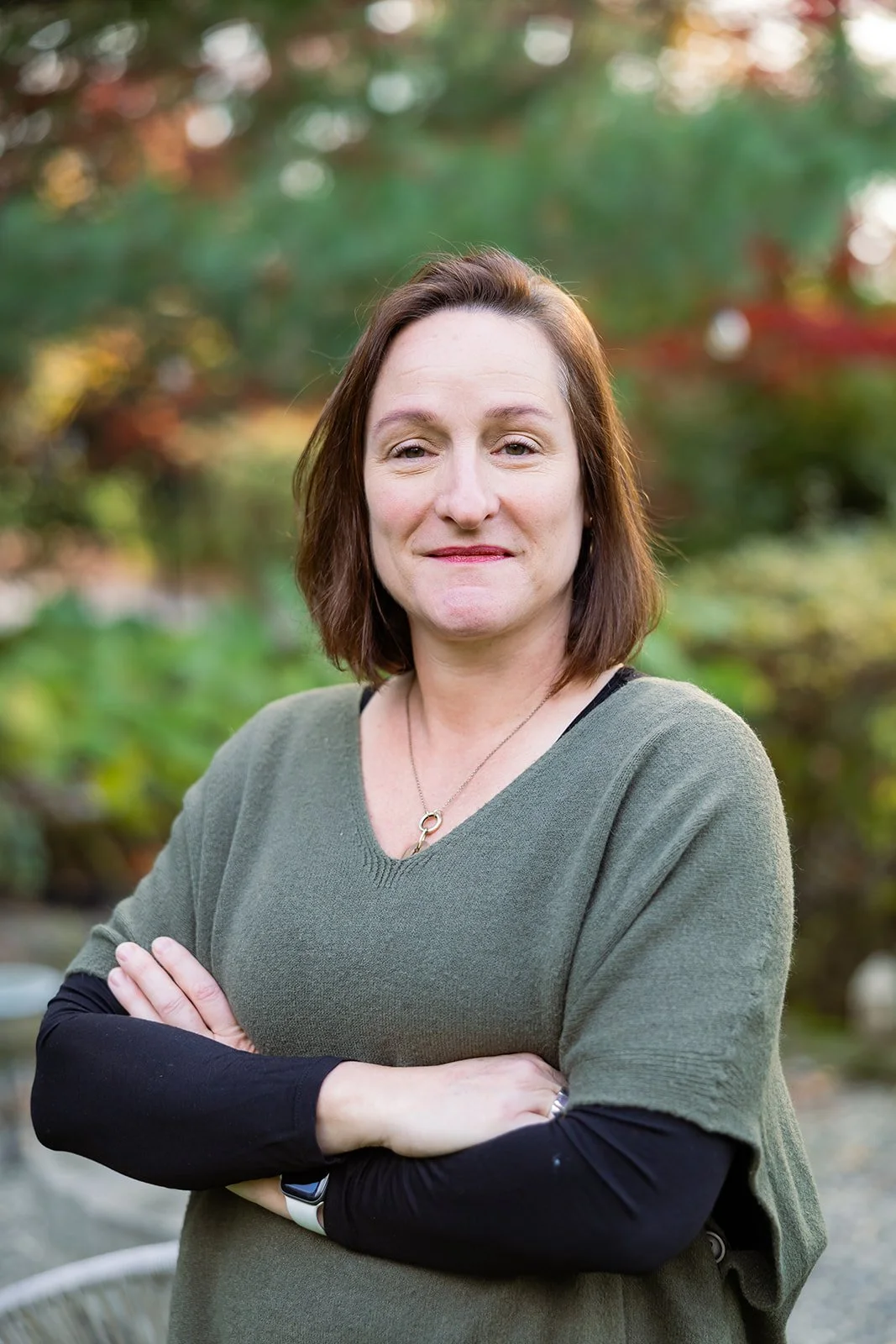
Cécile Roberfroid never plans her paintings ahead. Instead, she picks a color that she feels corresponds to her mood at the moment, and splashes it onto the canvas. She throws oil paint on the canvas, blends and modifies the colors as long as she feels she needs to.
Cécile is an abstract artist and she has been an artist forever. Her parents would move a lot internationally during her childhood, and she would constantly find herself in environments where the language and communication barrier would be an issue. So, she found her voice in art - she could express herself without the need for words. “Art was always a place that I could ground myself in. It was a constant.” Cécile carried this perception through childhood, leading her to study studio art and art therapy in college. For her, it was the perfect combination of giving back and working with people while keeping art in her corner. Her medium has always been oil paint, but after having kids, she had to stop working with it for a while. She switched to fiber arts for a while, admittedly falling in love with fabrics which resulted in experimenting with quilts. However, once the kids were grown, she returned to her preferred medium. She is now a full-time oil painter and a president of a community gallery.
Oil paint takes a lot of time to dry, which leads Cécile to work on several artworks at the same time - they tend to be in a similar color palette. “Eventually, it speaks to me. If I'm lucky, it's a couple weeks. Sometimes it could be close to a year.” In the creative process, the canvases rotate, the color palettes change, and the end product looks completely different from where it started. The layers build up based on the feeling, not a pre-decided idea. Cécile confessed that it is actually more difficult for her to work if she has a plan. The artist shared that she takes pictures of her works in process to figure out a better composition, later looking at those images in black and white to see the contrast areas more clearly. “It’s still very spontaneous,” Cécile admits.
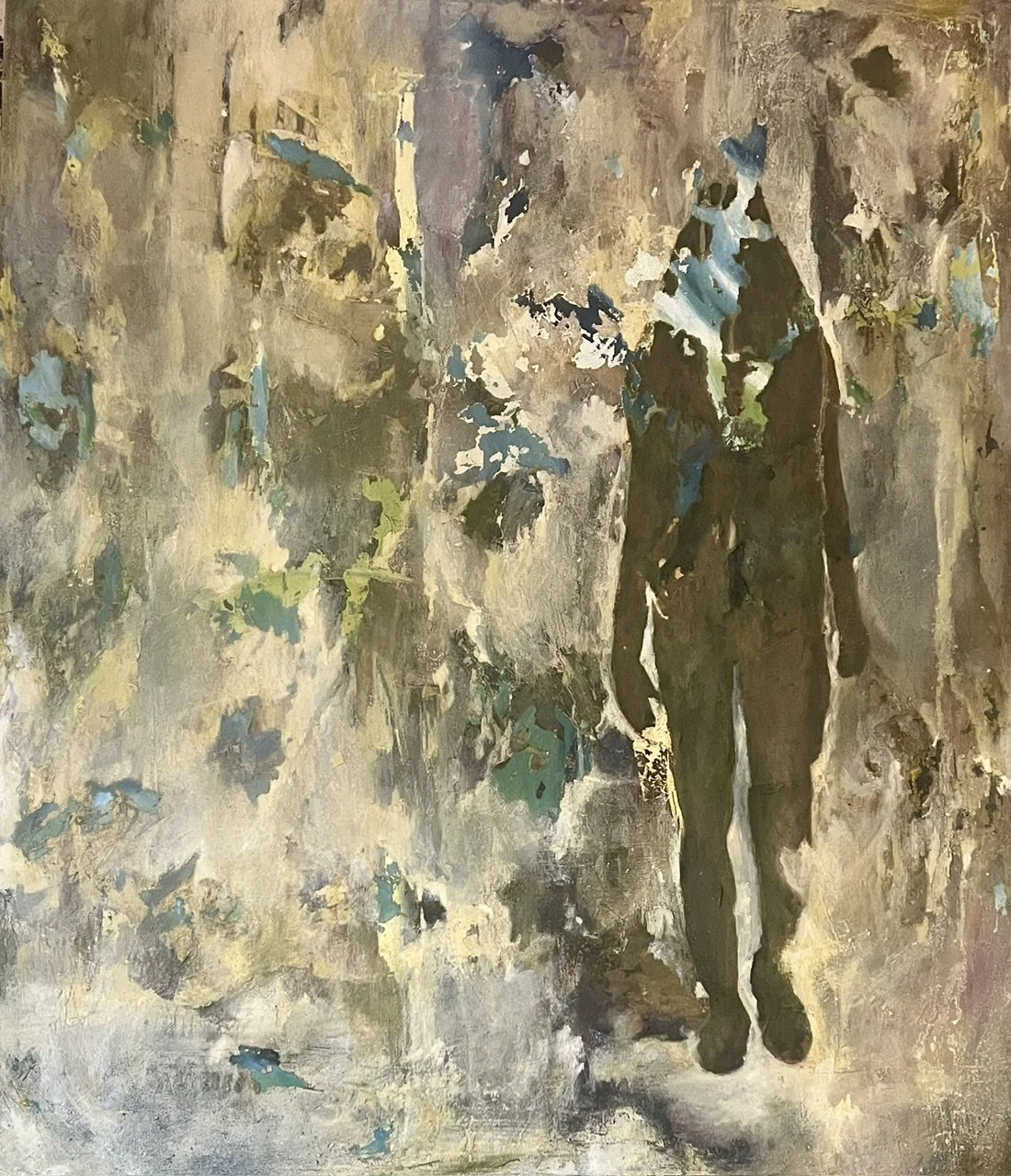
Along the Way, oil on canvas, 30 × 26 inches
The artist notes that color is the most important element of her creative practice. “Emotions are colors, feelings are colors. It's what I react to with art.” Cécile believes that this idea comes from her background in art therapy, suggesting that the colors are therapeutic in themselves. She shared that she has worked in black and white as well, but she keeps returning to color and what it has to offer. The emotional response to colors is what maintains Cécile’s art practice - she shared that her artworks transform immensely as the painting process progresses. She might start a painting in yellows and reds and in a month, it would be covered in blues already. At the same time, the artist does not associate specific colors with specific emotions, every time any color may be a representation of something different.
Oil paint is Cécile’s favourite medium, despite having experimented with acrylic paint. She shares, “They're better for the environment, they're easier to work with, and I hate them.” According to the artist, oil paint provides more vibrant colors and its viscosity allows it to transform and edit a painting for longer. Cécile loves that she can return to the same painting in a week or two and it will be in the same state she left it in. It allows her to do a lot of blending and scratching to get the underlayers to come through. In her artworks, Cécile has very few straight lines and angles, she shares, “I really enjoyed the fiber arts, but there was definitely a lot more constructing, where the paint is much more emotional and instinctive. At this time in my life, that's where I want to be.”
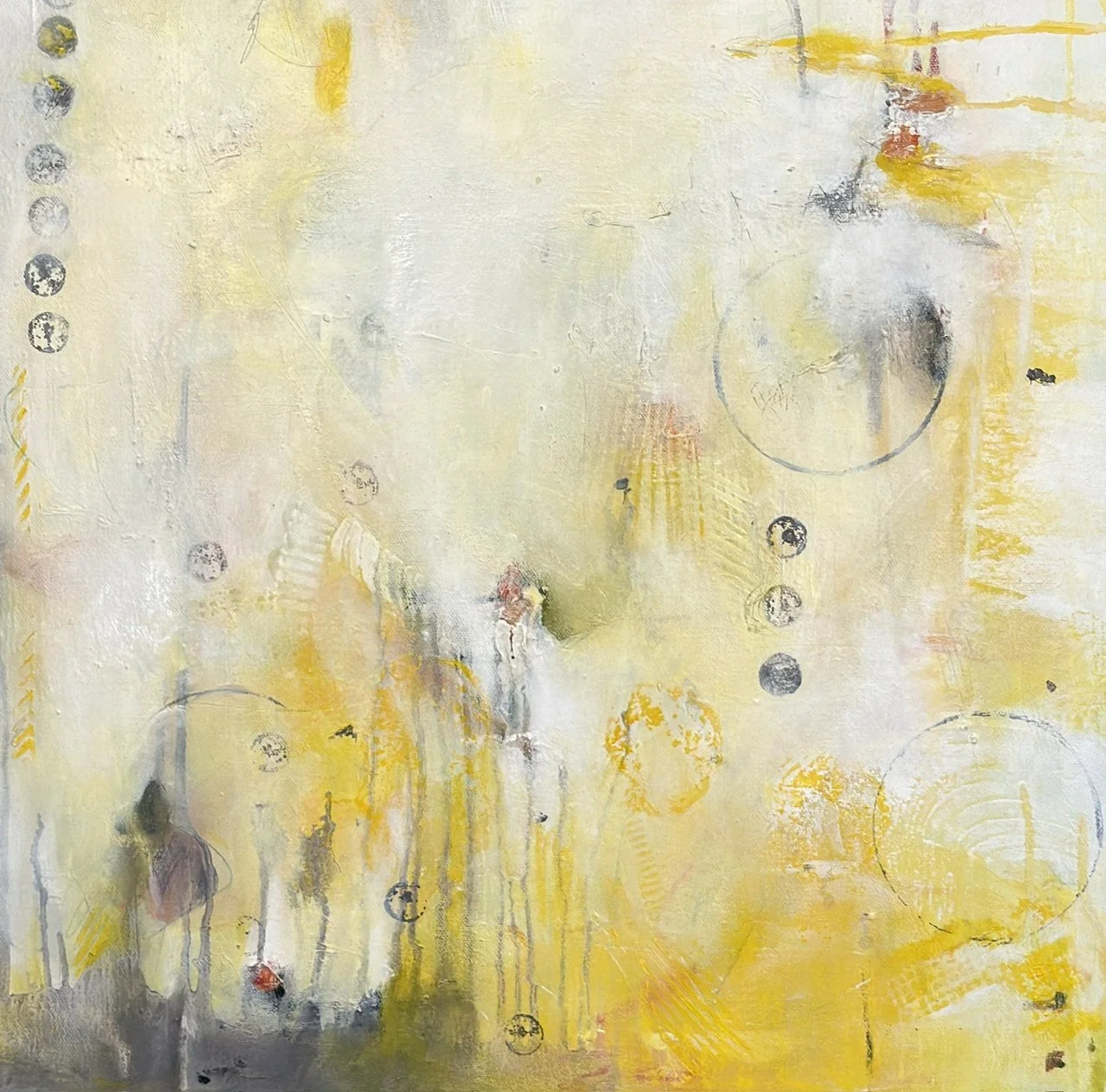
Citrus Secrets, oil on canvas, 18 × 18 inches
Cécile has a strong preference for creating abstract art. When I asked about her connection to it I learned that interestingly, about two years ago, the artist created a series of figurative paintings. Cécile confessed that the figures appeared in her art by themselves and she did not initially decide on adding them at all. However, when she saw the first one appear, she wanted to see where it would lead her. She then realized that figures are easier for her to paint than the purely abstract pieces. The artist explained that as soon as you see a figure, you are going to identify a feeling, find out what the figure's doing, and want to give it a story. Abstract art is, in turn, more open-ended. “Purely abstract art gives more space to both myself and the viewer. It gives the viewer a lot more space to fall into the painting and find their way around.” She compared the experience of looking at her pieces with looking at the clouds and encouraged interpretation of her artworks. “What it is that you find in a cloud, or what it is that you find in a purely abstract piece of work, as a therapist, says a lot.” However, Cécile assured me that her artworks are not an alternative to the Rorschach test (a projective psychological test that uses a subject's interpretation of 10 standard black or colored inkblot designs to assess personality traits and emotional tendencies - Merriam-Webster) - it’s the idea of something that is not meant to have any actual shape that unites them. In the figurative pieces, some sort of story is already embedded in the narrative while the abstract art gives more space for a wider dialogue.
I asked where Cécile puts herself in this dialogue, often happening exclusively between a viewer and an artwork. She smiles, “The painting is initially for me. As a creator of it, it starts as an almost self-centered act. My paintings are a true interpretation of where I am emotionally at the moment.” After the painting is finished, the artist has already resolved what she needed to resolve, and she gives it to the viewers to read into it further. “It's almost like a gift. The thing that I created took me through this path and helped me. So now, here it is, and hopefully you can also feel better, or feel something.” Cécile herself enjoys art that makes her feel something, it does not matter if the emotion is positive or negative. “As long as a piece makes me feel, it's successful. If I walk into a museum or a gallery and I walk by a piece and I don't have some sort of emotional reaction, it does not work for me.” Since Cécile looks within herself for her own art, she finds inspiration in things that cause a reaction in her. For example, she finds daily events and the news delightful and concerning. The artist shared that she likes putting on the news or podcasts while she is creating - she would catch a word or two while focused on her piece, and they would help her redirect her emotions and bring more colors to the composition.
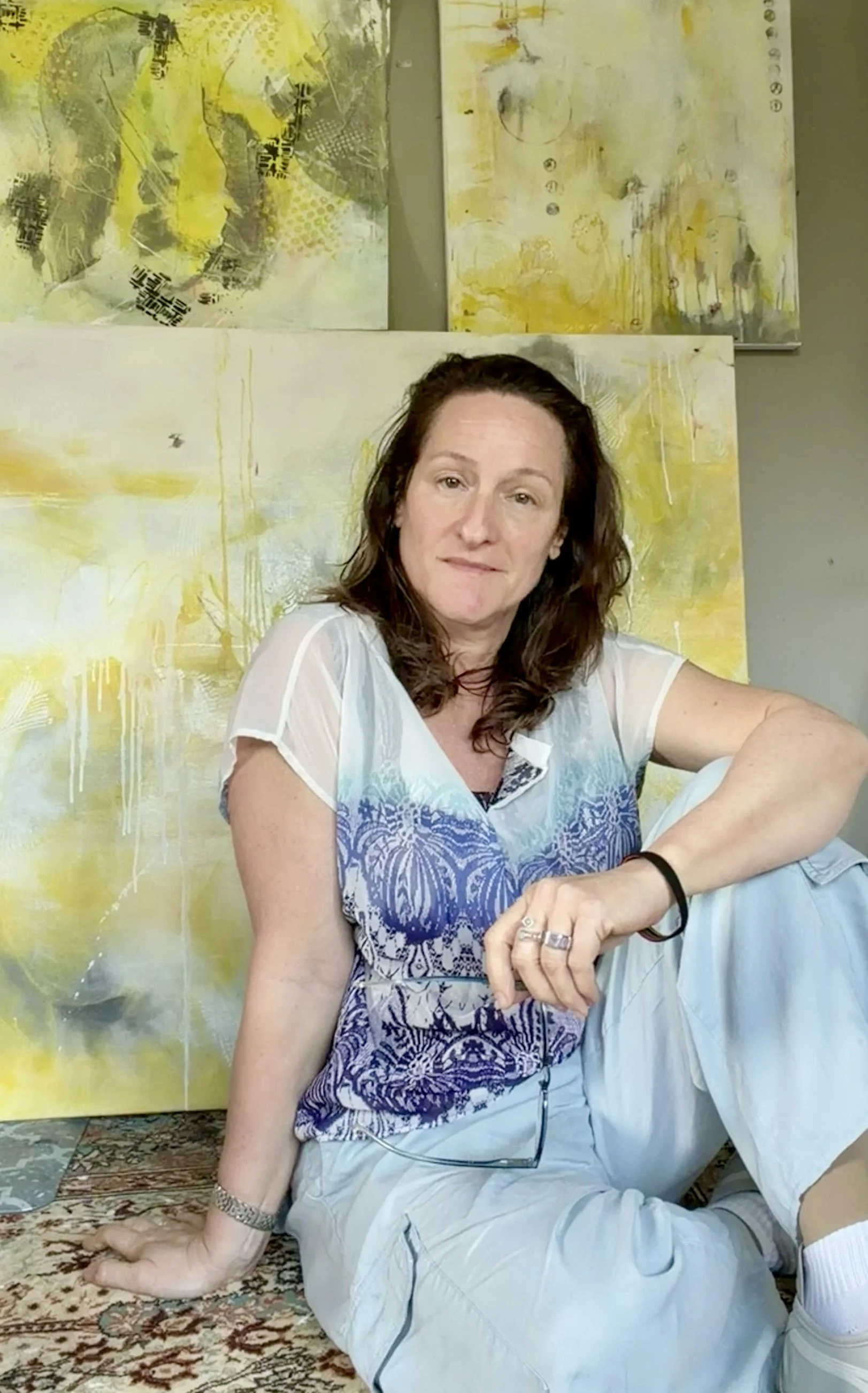
The artist keeps herself busy, Cécile shared that she is currently working on a collaboration with painters and poets, where poets will write a poem in response to a specific painting. The show is hosted by The Mamaroneck Artists Guild and will be a year long traveling show all over Westchester county. She also has a show starting this month in collaboration with another artist showing works in the Julia B Fee offices of Rye, where the 50% of their proceeds will go to "My Sister's Place" an organization where she volunteered to help victims of domestic violence and human trafficking. On top of that Cécile is excited to share her upcoming solo exhibition at Collective Z, a NYC gallery, which runs September 30th to October 17th. We are excited for Cécile, and strongly recommend going to see the exhibition - you might end up having a great dialogue with one of her pieces.
“Cécile Roberfroid: Carried, Not Told” opens at Collective Z Gallery on Thursday, October 1 from 6PM-8PM. The show concludes on October 17. Please RSVP for the opening reception at the link here.
Instagram: @cecile.roberfroid.art
Website: cecileroberfroid.com
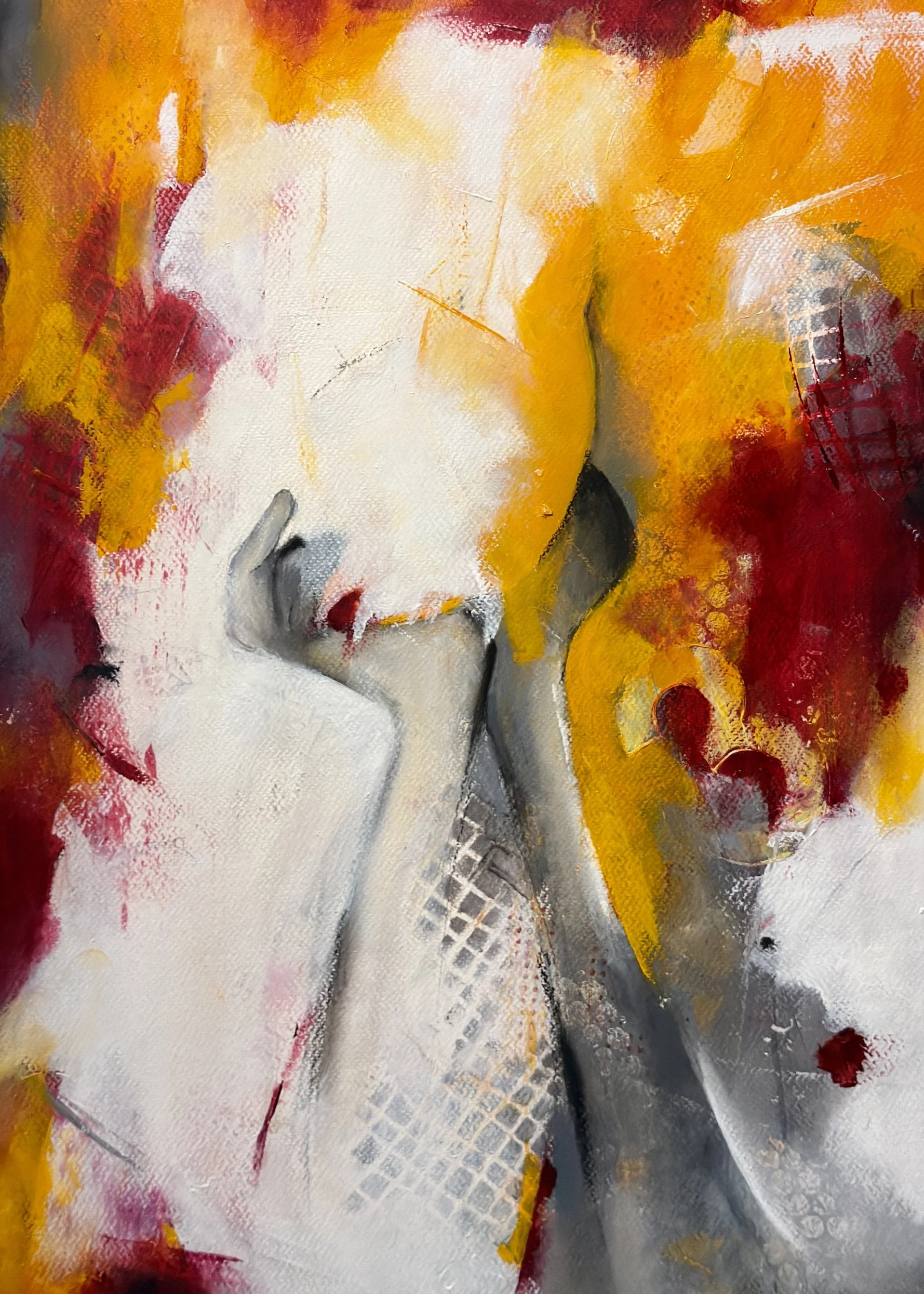
Lost Thoughts, oil on paper, 20 × 16 inches